
DistroKid vs Ditto — which distributor should you choose?
As an independent artist, I break down what you need to know about both music distributors and see how they compare

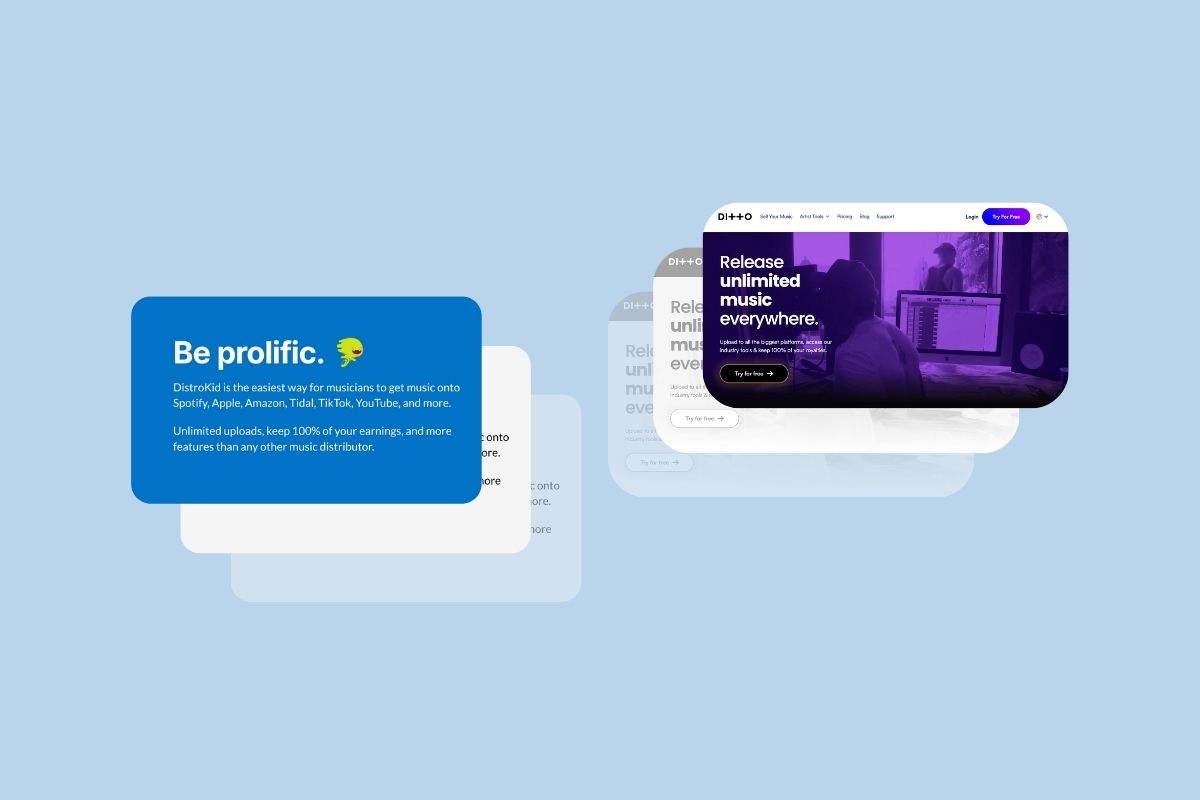
Are you struggling to decide between DistroKid and Ditto? These are two of the biggest music distributors in the industry, and both are popular options for independent artists and producers like me.
Show table of contents Hide table of contents
I personally use DistroKid to distribute my music at present, and I’ve also signed up to Ditto to explore its onboarding process and dashboard.
In this article, I’ll cover the key similarities and differences between both distributors to help you decide which option makes the most sense for you.
Quick summary: DistroKid vs Ditto
DistroKid is the distributor I personally use as an electronic artist. It’s a great choice if you want fast uploads and plan to release music regularly. It’s a popular and established distributor, and its plans are paid for yearly, with higher plans unlocking additional features.
Ditto Music is a strong alternative that I’d seriously consider if I were choosing my first distributor. It offers a clean, modern interface and optional publishing administration, and like DistroKid, its plans are also paid for yearly, with higher plans unlocking additional features.
Before jumping into the details, bear in mind that pricing, features, and terms can change over time, so always check the official DistroKid and Ditto Music websites for the most up-to-date information.
My experience with DistroKid
I chose to use DistroKid as my music distributor back in 2024. I had initially started out using SoundCloud for Artists because I already had music on SoundCloud, but I decided to switch to DistroKid because it offered Beatport distribution, which SoundCloud didn’t at the time I used it — and this was important to me as an electronic music artist.
Overall, my experience with DistroKid has been very positive. I’m able to distribute my electronic tracks to Beatport and get my music delivered quickly to most major stores, including Spotify, Apple Music, and YouTube Music.
One thing that immediately stood out to me is how fast releases are delivered to stores. For example, when uploading a track on a Monday, I’ve often seen it appear in my Spotify for Artists as an upcoming release by the Wednesday of that same week.
I’ve also found the upload process to be simple and straightforward with DistroKid. The design of their website is not the most modern, but everything is pretty clear and easy to get to grips with.
You can manage all of your earnings in the “Bank” section of your DistroKid account, where you’ll find details of the royalties your tracks are earning and request withdrawals via your preferred payment method.
I personally pay for DistroKid’s “Ultimate” plan, as this unlocks most of the tools I need for my music, but there are other lower tiers to choose from depending on what you need.
Any negatives?
I have two minor gripes with DistroKid. The first is that even with the Ultimate plan, not everything is included as standard. For example, if you want to use YouTube Content ID with your music, you’ll need to buy this as an additional add-on on a per-track basis. Another example is Beatport distribution, which requires an additional monthly fee.
The second is that there is no option to pay monthly. With DistroKid, you can only pay on a yearly basis, which is a longer commitment than some other distributors that allow you to pay monthly or per release.
My overall verdict on DistroKid
I’m a big fan of DistroKid and still use it for all of my releases, which speaks for itself. I like how fast and easy it is to use, and I think the fact that it’s so popular also gives me peace of mind, knowing how many other artists use it.
My (limited) experience with Ditto
I haven’t used Ditto Music to distribute my own releases, but I did sign up for an account to explore the onboarding process and get a feel for the dashboard as an artist.
Based on what I’ve seen and my research, Ditto looks to be another excellent option for independent artists. If I were choosing my first music distributor today, it’s probably the one I would most strongly consider alongside DistroKid.
One thing that stood out to me is the overall design of the platform. The dashboard definitely feels a bit more modern than DistroKid’s, and everything is laid out clearly. Ditto also offers optional publishing royalty collection as part of their higher plans, which is a very cool feature indeed.

It’s worth taking a look at their plans to see which features are included to help you select the best one for you. Like DistroKid, Ditto uses a yearly payment model rather than monthly.
Any negatives?
As I haven’t released music through Ditto Music myself, I can’t comment on things like delivery speed or long-term reliability from personal experience.
That said, one potential downside for some artists is the lack of a monthly payment option. Like DistroKid, Ditto requires you to pay on an annual basis, which may not suit you if you’re only planning to release music occasionally.
My overall verdict on Ditto
Ditto Music is another very solid option, in my opinion. Although I haven’t used it to distribute my own releases, I did sign up for an account, and it has a clean, modern user interface and offers most of the features you’d expect from a high-end music distributor, particularly on the higher plans. As I mentioned above, if I were choosing my first music distributor, Ditto is probably the one I would consider alongside DistroKid.
DistroKid vs Ditto — who should choose which
Still deciding between DistroKid and Ditto? Here are my thoughts in a nutshell.
Choose DistroKid if you want a fast, simple distribution process and plan to release music regularly. Based on my personal experience, it’s a good fit for electronic artists who value quick delivery to stores.
Choose Ditto if you like the idea of a slightly more modern interface and want the option to combine music distribution with publishing administration. It’s another solid choice if you’re comparing distributors for your first release.

Wrapping up — my final thoughts
So, we’ve reached the end of my DistroKid vs Ditto Music comparison. In case you haven’t already realised, I think they’re both great options.
I personally use DistroKid to distribute my music, but if I were choosing my first distributor or thinking of switching from a different one, I’d also strongly consider Ditto Music. I know that sounds a bit like I’m sitting on the fence, but overall, I genuinely think both platforms are solid choices, and which one makes more sense will come down to your own needs and personal preferences.