
Best virtual synth for melodic house and techno (my top pick)
Why U-he Diva is my favourite virtual synth for melodic house and techno, how I use it in my own tracks, and what to know before buying

Are you just getting started with producing melodic house and techno and looking for the best virtual synth to create the genre’s unique sound?
Show table of contents Hide table of contents
I’ve been producing melodic house music for the past few years and have experimented with quite a few different virtual synths and plugins, so I thought I’d write this article to cover my top pick to help if you’re just getting started.
Quick summary
I’ve been producing melodic house music for a few years now, and after experimenting with plenty of virtual synths, U-he Diva has become my go-to choice. In this article, I explain why Diva fits melodic house and techno so well, how I use it in my own tracks, and a few things worth knowing before you buy it.
I started producing electronic music back in 2022, inspired by artists like Ben Böhmer and Kygo. I was especially drawn to Böhmer’s smooth melodic house sound after first discovering his music through a live performance of his track “Beyond Beliefs” on YouTube.
That led me down the path of eventually taking Ben Böhmer’s masterclass on Production Music Live, which gives great insight into how he makes his music, including a detailed track breakdown of “Beyond Beliefs.” You can find out more about my favourite melodic house production courses and tutorials in my dedicated article.

My top pick: U-he Diva
U-he Diva is a special virtual synth. I actually first discovered it on Ben Böhmer’s PML course, as it’s one of the main synths he shows himself using in his track breakdown of “Beyond Beliefs”.
After seeing Ben use it in his productions — especially for those deep, analogue-style plucks — and learning a bit more about how he creates his sounds, I took the plunge and bought it. It was probably one of the most important purchases I made on my music production journey.
U-he Diva is a virtual synth designed to capture the “spirit of analogue” in a digital instrument. After having used it for the best part of two years in my productions, I can honestly say that I can’t remember the last time I released a melodic house track that didn’t feature an instance of Diva — it’s that important to my sound.
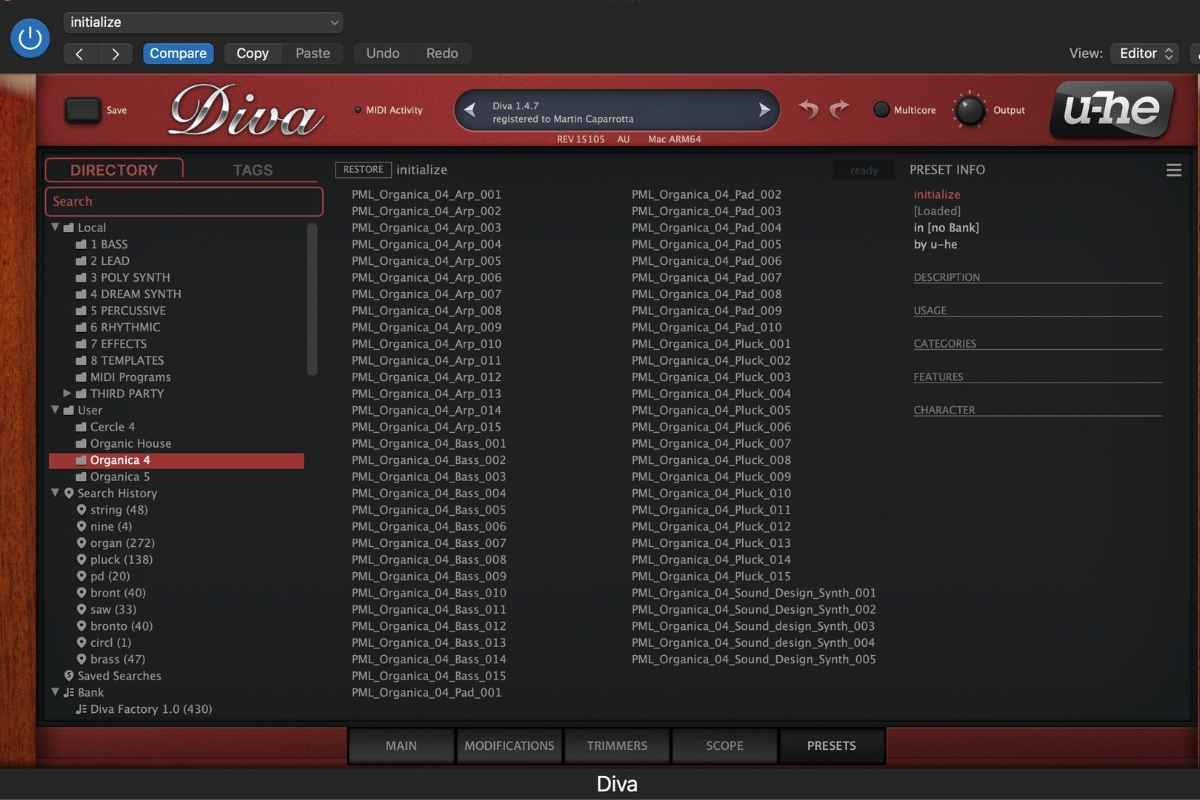
What’s great about Diva is that you don’t need to be a sound design expert to get started with it. You can either make use of one of the many bundled presets that come with it, or extend the range of sounds available by purchasing a Diva preset pack.
That said, if you’re willing to put in the time to learn how to use Diva properly, it can become even more valuable. Personally, I still lean on presets as the starting point for a lot of my sounds — I’ll often load up one of my favourites and tweak it from there. Over time, I’m learning more and more about how to use Diva to create the sounds I’m looking for.
Why Diva fits melodic house and techno so well
Diva has a sound which is closer to an analogue synth than anything else I’ve found in a VST. It’s perfect for creating those smooth, lush pads that are so important in a supporting role in melodic house and techno tracks.
It’s also great for creating deep, emotive plucks and leads that help define the genre’s spellbinding feel. Diva’s built-in delay and reverb settings are a simple way to quickly add depth to your sounds without relying on third-party plugins. The built-in LFO features also offer a great way to add organic-sounding movement to your sounds, again without relying on separate plugins.
How I use Diva in my own tracks
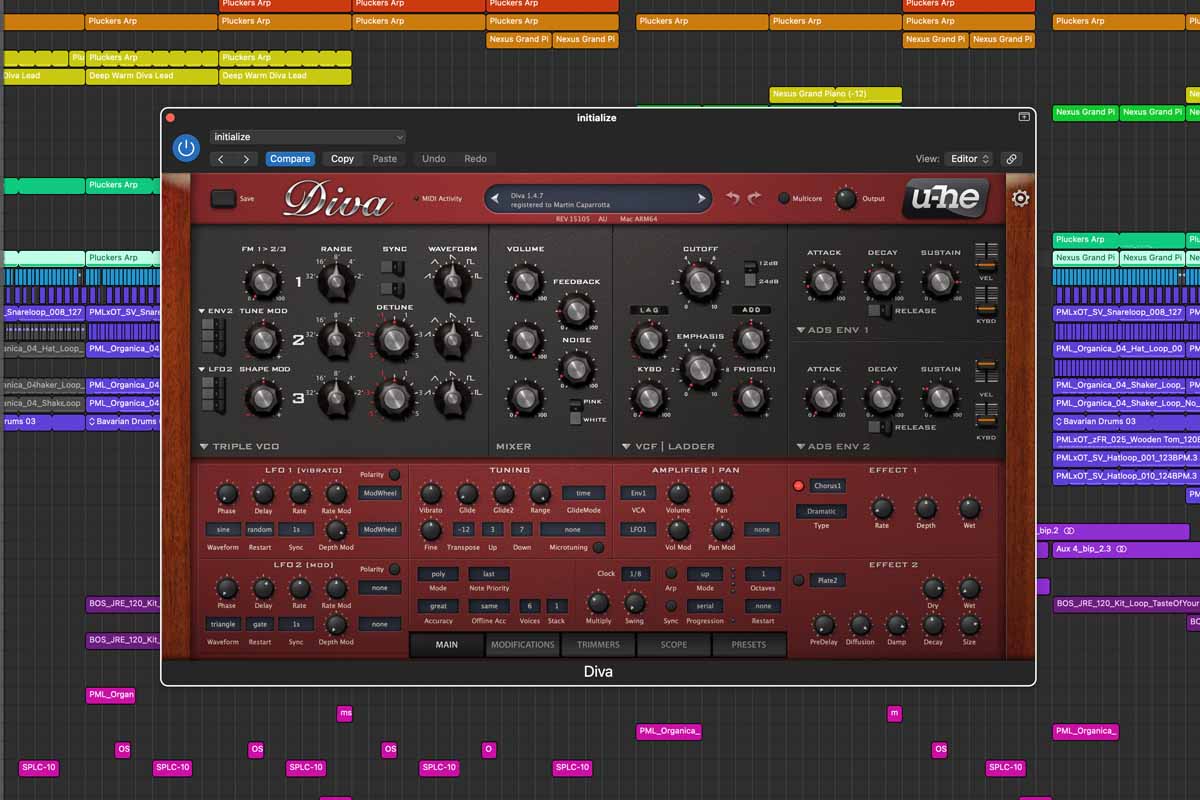
Diva is always the first synth I turn to when I’m looking for a lead sound for my melodic house tracks, whether it’s a plucky arp or a deeper legato lead.
As I mentioned above, my starting point is often one of the presets I own, which I’ll then edit and tweak to find the exact sound I’m looking for. Sometimes, I’ll make mistakes while editing a preset and end up creating one of those “happy accidents” that becomes a totally new sound — and not the one I was envisioning at all.
In terms of my own music, probably my favourite track that I’ve released recently that uses Diva is called “Towards The Light” — you can find it on Spotify and Apple Music if you want to take a listen. I used Diva for the main lead pluck, running through an arpeggiator.
Things to be aware of before buying Diva
Diva is a VST plugin; it’s not standalone software, so you’ll need a DAW to use it. I personally use Logic Pro, although if I were to start again, I’d probably go with Ableton Live.
Diva is also a bit resource-heavy when it comes to CPU usage. If your computer system isn’t particularly fast, you may struggle with CPU overloads, especially if you’re using more than one instance in a project. That said, it’s usually fine for me during production sessions — it’s just something to be aware of.
Where can I buy Diva?
You can purchase Diva directly from the official U-he website. It’s also available from other plugin retailers, such as Plugin Boutique.
I definitely recommend checking out Plugin Boutique, as they sometimes run sales and discounts, and they also offer a rewards scheme that lets you earn credit towards future purchases when you buy from them.
Final thoughts
That brings us to the end of my article on my top pick for a virtual synth for creating melodic house and techno music. U-he Diva is my top choice if you make music in these genres. It’s a special VST which has quickly been incorporated into my production process and now forms one of the major pillars of my overall sound.