
Best bass plugins for house music (melodic, deep and techno)
Discover the best bass plugins for house music, including melodic, deep and techno styles. I break down why Diva is my top pick at the moment

Finding the right bass synth for your house music track is one of the most important decisions you’ll make when it comes to the overall vibe of your song.
Show table of contents Hide table of contents
For me, the most important thing is to have a bass synth you can rely on time and again in your tracks. You don’t need five or ten different VSTs — it’s about choosing one that’s versatile enough to fit into most of your tracks.
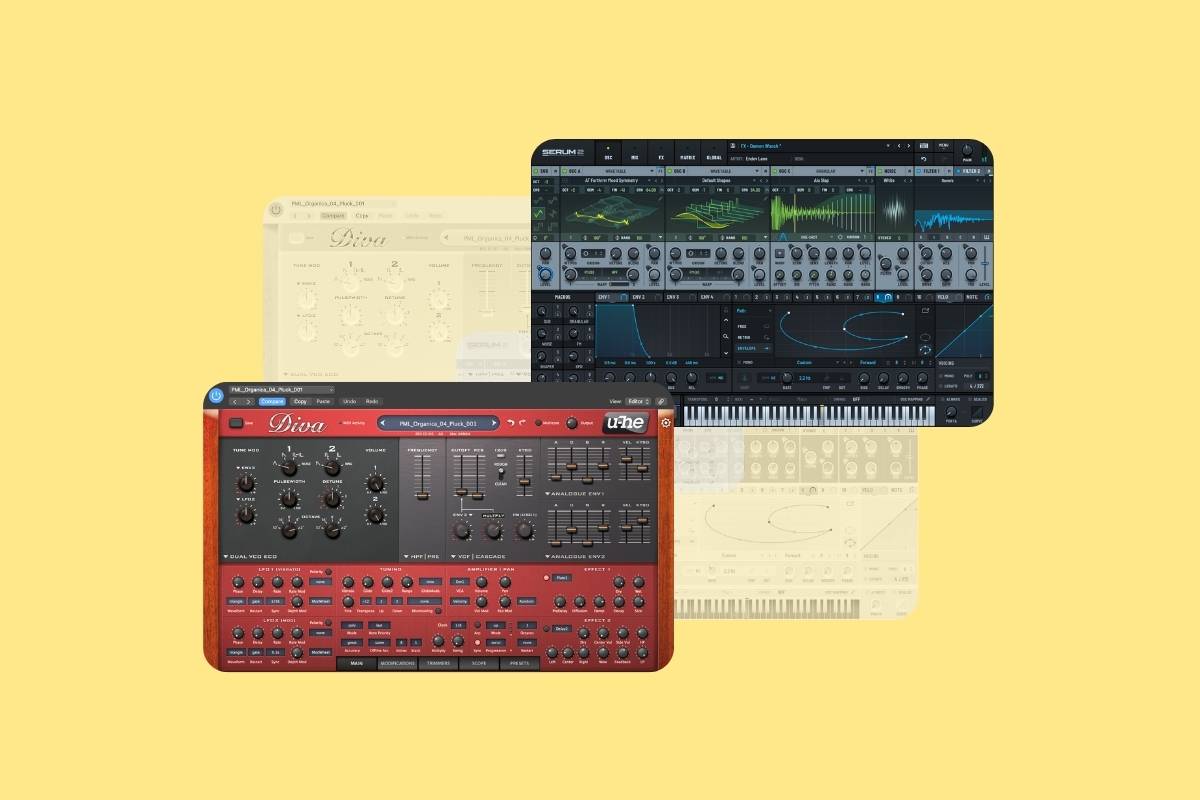
I personally don’t recommend buying lots of plugins until you’ve fully mastered the ones you already own. I prefer to focus on having a small number of trusted plugins specific to your genre that you can rely on time and again.
In this article, I’m going to cover my top picks for bass plugins for house music. I mainly produce melodic house, but I also make deep house, and the plugins on this page can work just as well for techno. So let’s get started.
Quick verdict
If you want warm, analogue-style bass that sits effortlessly in house mixes, U-he Diva is my top pick. It’s versatile enough to handle melodic, deep and techno basslines without needing endless tweaking.
What makes a good house bass plugin?
One of the most important aspects of a bass synth is versatility. You want to choose a plugin that can help you create smooth legato basslines that work well in melodic house, but also one that can deliver deep pluck-style bass for groove in deep house tracks. It should be able to handle warm rolling basslines as well as shorter, punchier patterns without losing weight in the low end.
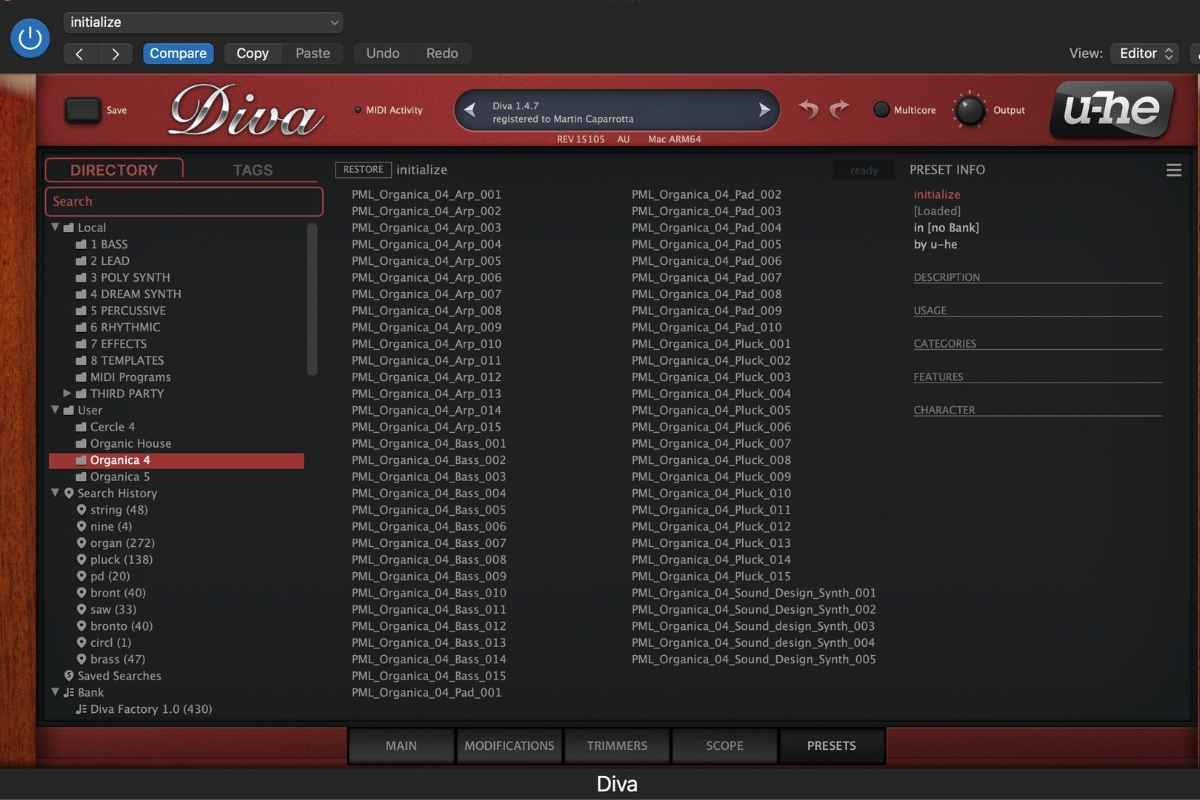
I am by no means a sound design expert, so I also appreciate it when a plugin is easy to use and comes bundled with lots of presets as starting points. A clear layout, intuitive controls and musical-sounding filters make a big difference when you’re looking to shape bass quickly. The ability to extend the plugin by buying additional preset packs from trusted sources at a later date is also important to me.
When it comes to my own music production process, I favour tools that remove friction and are easy to set up and use to help me get ideas down when I’m in the creative flow. I try and avoid overly complicated plugins that can slow down my creative process.
For house music in particular, I also look for a bass plugin that sits well with the kick drum without requiring excessive EQ or processing. If the tone is right from the start, mixing becomes much easier.
Best overall bass plugin for house: Diva
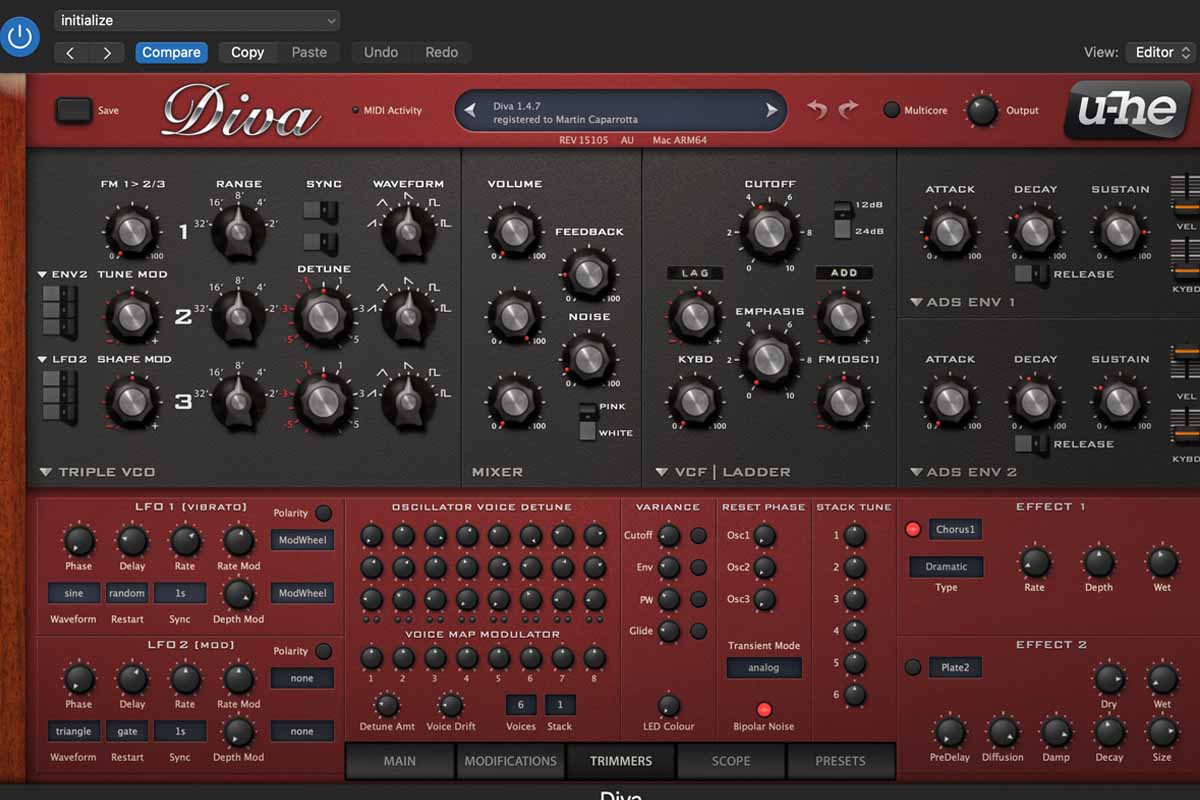
If I had to choose only one plugin for house music, it would be U-he Diva. It’s the virtual synth I return to most often for plucky leads and lush pads — but it’s also my go-to synth for bass in most of my tracks.
Why Diva works so well for house bass
- Analogue warmth — If you’ve read any of my articles about Diva before, you’ll know that it’s my favourite virtual synth for melodic house. It may be a digital synth, but it’s been designed to capture the “spirit of analogue”, meaning that it has weight in the low mids and doesn’t feel sterile.
- Can be punchy and smooth — Diva can produce a wide range of bass sounds that are perfect for house music. From punchy plucks to smooth legato basslines, it’s very versatile.
- Sits well with the kick — When I use Diva as my bass synth, I find it easy to mix with the kick — not much corrective EQ is needed, which helps to speed up the creative process.
- Presets — Diva also comes bundled with lots of presets as starting points, and you can also expand your selection by buying Diva preset packs in the style of music you make.
Best styles Diva works for
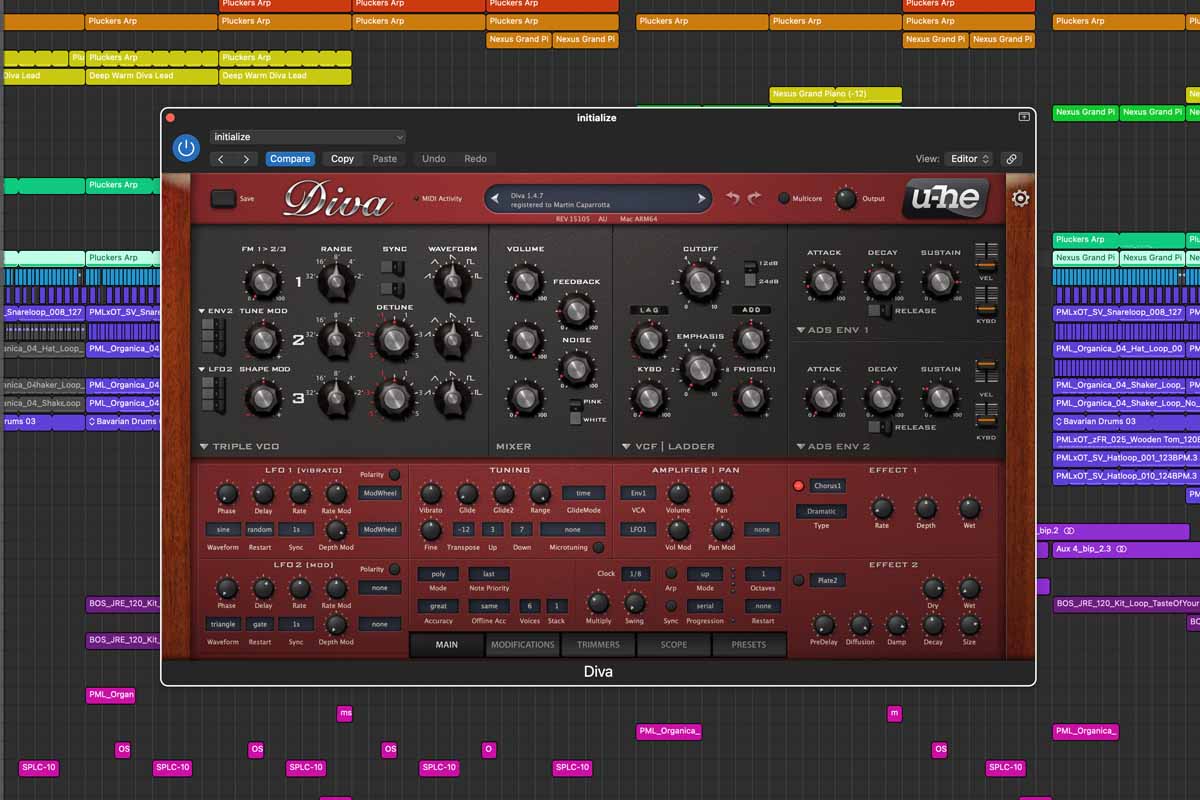
Diva is a great choice as a bass synth for most house music, especially melodic house, organic house and deep house. It can even be used for genres like melodic techno.
Any downsides?
- CPU usage — Diva can use a lot of resources, and its CPU usage can be quite high. If you’re using multiple instances of Diva in one project, you may run into CPU overloads. There are settings within the plugin to help mitigate this, but it’s definitely something to be aware of.
- Old-school interface — Diva is not as modern as some of the other digital synths out there as it mimics an analogue style. I personally like it, but some people may find it a bit outdated.
- A bit expensive — At the time of writing this article, Diva costs €179 (about $200 or £150), so it’s on the pricier side. That said, you can shop around and sometimes find it a bit cheaper during sales and discount periods. For example, sites such as pluginboutique.com sometimes run their own promotions and sales, so it’s worth shopping around.

Who should buy Diva?
Diva would likely be right for you if…
- You produce house music
- You’re looking for an analogue-style sound
- You want one main bass synth
It may not be the best option for you if…
- You want a super-modern EDM-style bass synth
- You have a very low-spec computer (you may struggle with CPU usage)
Overall, if you’re producing house music and want a bass plugin that consistently delivers warmth and weight, Diva is definitely my top choice.
Best digital bass plugin for modern house: Serum
Although I don’t personally use Serum in my own productions, it’s one of the most popular choices for modern house producers — particularly those making tech house and more EDM-leaning styles.
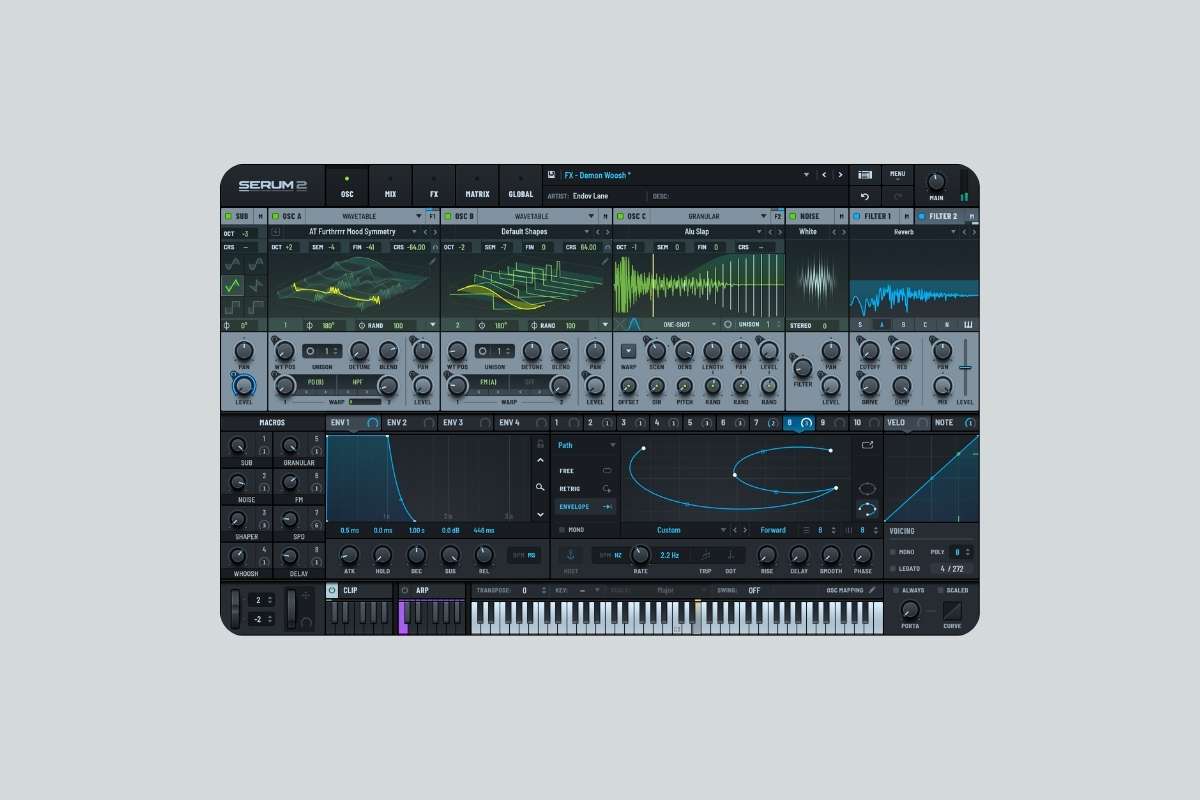
Where Diva is warmer and more analogue, Serum is often cleaner and more precise. Its wavetable engine makes it easy to design sharper, more aggressive bass sounds with tight transients and a very controlled low end. If you’re aiming for punchy, upfront basslines that cut through a busy mix, Serum is often the go-to option.
If you prefer a modern, digital sound over analogue warmth, Serum is definitely worth considering.
Diva vs Serum for house bass
Diva and Serum are two of the most popular synths for house music basslines.
The main difference between the two comes down to the tone and overall feel. Diva has a warmer, more analogue and slightly saturated sound. It adds weight in the low mids, which makes rolling melodic and deep house basslines feel fuller without much extra processing.
Serum, on the other hand, is generally cleaner and more precise. It’s probably better suited to sharper, more modern house styles where you want tight transients and a controlled low end that cuts through the mix.
If you prefer warmth and character, Diva is my top recommendation. If you want a more digital, upfront sound, Serum may be the better fit.
Do you really need more than one bass plugin?
In most cases, no. I honestly believe that your time (and money) is better spent on getting good at one particular synth and mastering it as best as you can.
If you truly master one good synth you’re comfortable with, you can cover a huge range of bass sounds without constantly switching tools. I’d rather know one plugin inside out than own five that I only half understand.
I feel that if you master a synth like Diva, you don’t need five other similar VSTs. The key is learning how to shape the sound properly and make it work in your tracks — something which I’m still in the process of doing. I believe mastering one bass synth is better than endlessly chasing new plugins, which I have definitely been guilty of in the past.
My final verdict
There are so many options out there, but if I had to choose one bass plugin for house music, it would still be Diva. It delivers the warmth and weight that works beautifully in melodic, deep and organic house, and once you learn it properly, you can cover almost everything you need.
That said, if you prefer a cleaner, more modern digital sound, Serum may be a better fit. Ultimately, it’s less about owning multiple synths and more about mastering one that suits your style.