
Best chord progressions for melodic house (that actually work)
Melodic house chord progressions that actually work, with real examples, workflow tips — and how I use MIDI to start tracks faster

If you produce melodic house music, finding the right chord progression to build your track around is essential. The chords set the tone and feel of the track and act as an anchor that everything else is built around.
Show table of contents Hide table of contents
Almost all of the melodic house tracks I’ve released were built from chord progressions as the starting point. Sometimes I experiment with different chords on my keyboard to find one that sounds “right”, and other times I rely on pre-made MIDI packs to get ideas moving faster.
In this article, I’m going to cover the key things to know about melodic house chord progressions, focusing on practical examples that actually work, how I approach chords in my own releases (without relying heavily on music theory) and how MIDI packs can fit into your workflow as a simple starting point for inspiration.
Quick summary
In this article, I share a few chord progressions that I’ve used across my own melodic house releases and cover why they work well as track starting points. I also explain how I approach chords without relying too heavily on music theory, and how MIDI chord progressions fit into my workflow when I want to get ideas moving faster.
I’ve also organised the chord progressions I return to most often into a small MIDI pack.

Chord progression examples that work in melodic house
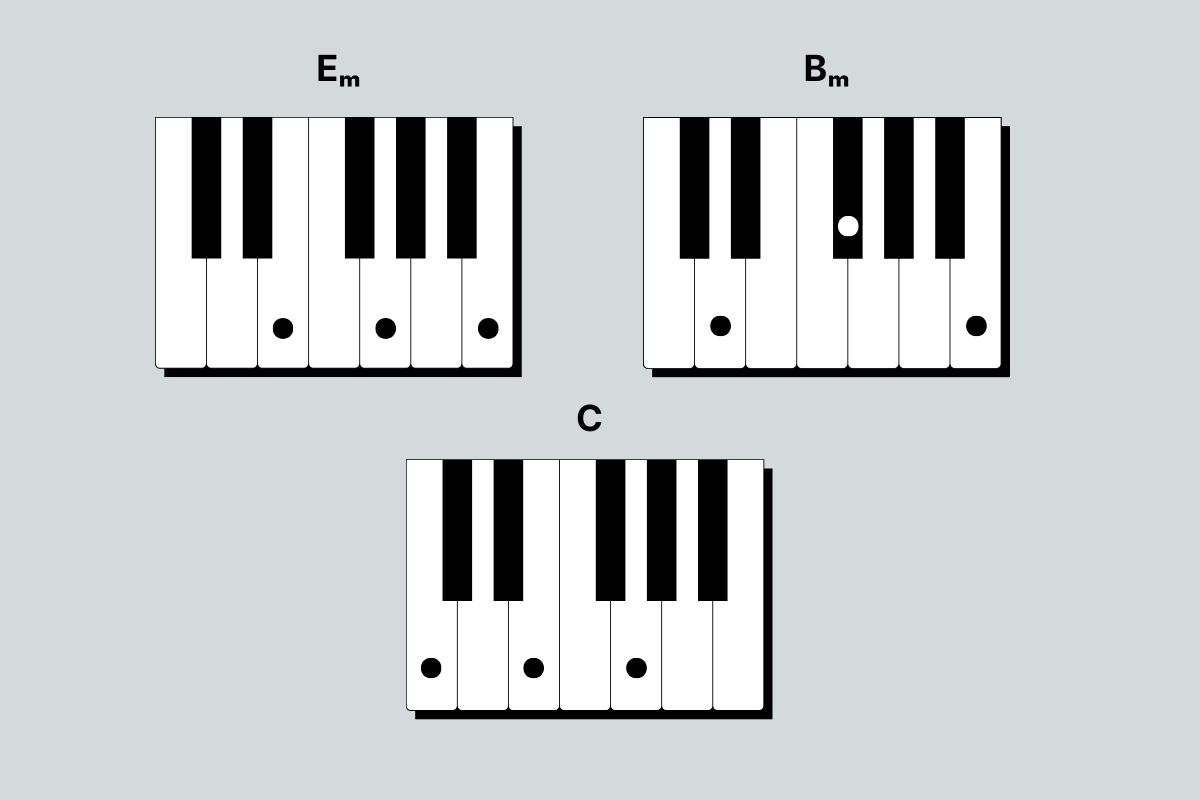
Here are some of the chord progressions I’ve used in some of my melodic house tracks, along with examples if they were played in the key of E minor.
i – VII – v – VI
For example, in E minor: Eₘ – D – Bₘ – C
This is a progression I’ve used in various forms across more than one of my melodic house projects. I love how emotional it sounds and the way it creates forward movement while still looping really well. It’s simple on paper, but once you start changing the voicing and sound, it can carry an entire track.

i – v – VI
For example, in E minor: Eₘ – Bₘ – C
This is another progression that I’ve leaned on in several tracks over the past year or so. It’s fairly straightforward, using only three chord changes. I feel that the simplicity leaves more space for movement in other elements, while still having the potential to feel very emotive.
How I’ve approached chords in my own releases
I don’t pretend to be an expert when it comes to music theory. Of course, I’ve picked up the basics over the years, but when it comes to finding the right chords in my workflow, for me it’s always been about moving quickly and smoothly so I don’t lose momentum and can stay in the creative zone.
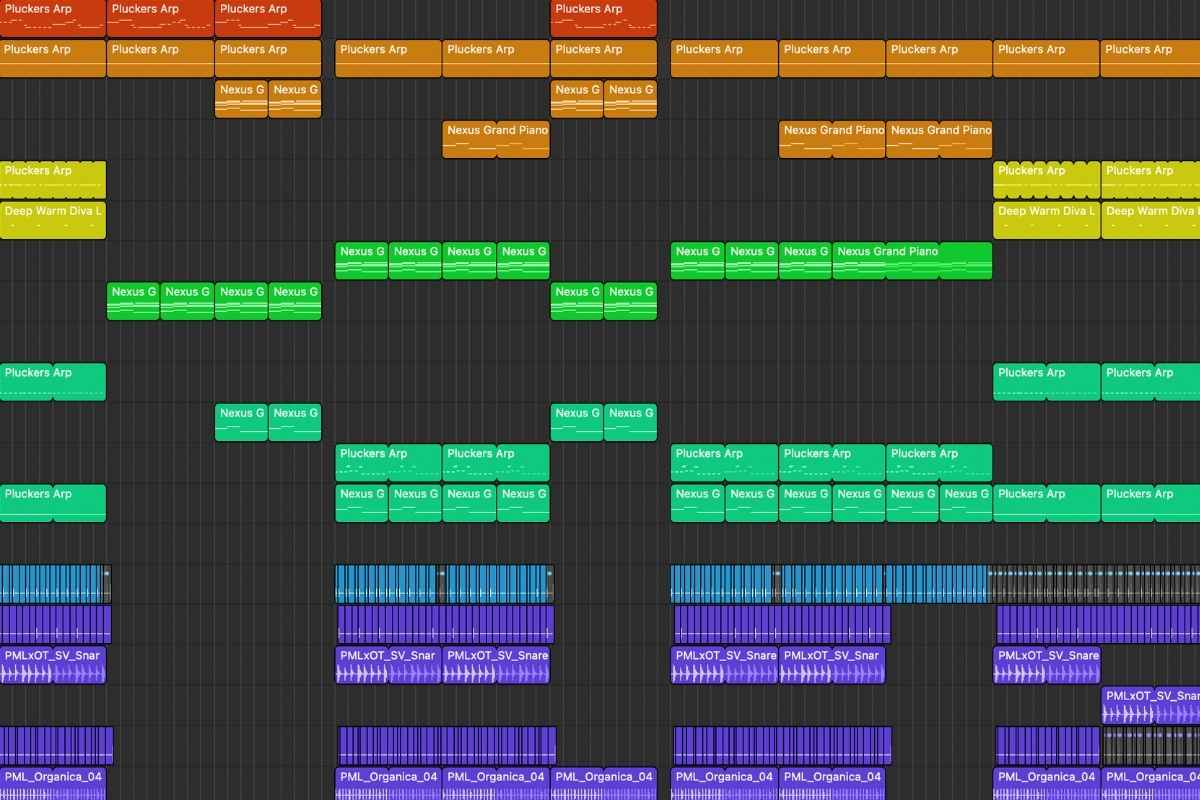
I’d say that about 90 per cent of my tracks are built from a chord progression as the first element (meaning that the chord progression is the starting point from which the rest of the song is created around). This means that finding one that feels “right” is really important.
I have two main ways of finding a chord progression to start with — either riffing on the keyboard until something clicks, or leaning on a pre-made progression from a MIDI pack as a starting point for inspiration.
“Simple” chord progressions can still sound emotional
There is a lot of information online about crafting chord progressions for house music in general, but I personally feel that some of this content puts too much emphasis on complex voicings and keys that are harder to build full tracks around.
Don’t get me wrong, you definitely do not want your chords to sound “cheesy”, but you also want to choose a progression that you’ll be able to build a track around confidently and quickly, especially if you’re still developing as a producer.
Choosing the right sound with a virtual synth like Diva, at least in my experience, is often as important as the choice of chord progression itself. You can always adjust the voicing of the progression later, shape it to fit the track, and go from there.
Using MIDI chord progressions as a starting point
If I’m struggling to find a progression I like the sound of on my keyboard, I’ll often turn to a MIDI pack of chord progressions purely for inspiration. Having a collection of pre-made MIDI files to lean on can help me speed things up and stay in a creative flow.
Using progressions in MIDI format is much more flexible than leaning on audio samples, because you can manually tweak the voicings, key and rhythm to find something that fits — and of course you can use any sound or instrument you like. I don’t think I’ve ever used a progression from a MIDI file exactly as it was — I always end up tweaking it a fair amount.
In short, a MIDI chord progression can act as a shortcut to a solid starting point to spark inspiration and save time when it comes to getting ideas down and moving a track forward.

My melodic house chord progression MIDI pack
After using chord progressions as the starting point for most of my melodic house tracks, I decided to organise some of the progressions I return to most often into a small MIDI pack. The idea was to have a reliable set of starting points I could lean on whenever I wanted to get ideas moving quickly early on during my production process.
These aren’t meant to be finished ideas or “drop-in” solutions, but simple starting points designed to spark inspiration that can be shaped through voicing, sound choice, and arrangement. I see MIDI chord progressions as a really important tool in my production process, especially when first starting a new track.
The pack contains 25 melodic house chord progression MIDI files, along with 25 matching bass-note MIDI files. I included the bass notes separately because figuring out root movement can slow things down when you’re trying to stay in a creative flow, and having the bass notes ready makes it easier to build ideas without overthinking early decisions.
Final thoughts
So, we’ve reached the end of this article focusing on chord progressions for melodic house music. Chord progressions are an integral part of the genre, and they’re the foundation that most of my tracks are built around. You don’t need a deep knowledge of music theory to make them work — what matters most is choosing a progression that feels right to you and sparks enough inspiration to give you something solid to build on.
Whether that starting point comes from riffing on a keyboard or leaning on a pre-made MIDI chord progression for inspiration, the goal is the same: providing a strong foundation for a track and removing as much friction from the creative process as possible.